By Morgann Darche & Susen Glunk
21/04/2026
Is participatory democracy in the EU genuinely shaping policy - or is it just a sophisticated exercise in political listening without real power?
Between 24 and 26 April 2026, the second session of the European Citizens’ Panel on Preparedness is taking place online, bringing together citizens from across the continent to address challenges ranging from public health emergencies to climate-related disasters. It builds on an intensive first session held last month in Brussels, where discussions moved beyond identifying shared challenges toward developing concrete, actionable solutions. If participatory democracy is to play a meaningful role in shaping Europe’s response to future crises, this panel will be a crucial test.
At a time when trust in democratic institutions continues to decline across Europe, the stakes go beyond consultation alone: can these panels empower citizens to influence how the EU prepares for crises, or do they risk becoming symbolic exercises in engagement?
What Are European Citizens’ Panels?
European Citizens’ Panels aim to be a key democratic innovation of the European Union. They bring together around 150 randomly selected citizens from all 27 Member States to discuss major policy topics that affect people across the EU. These panels are designed to be representative of the EU’s demographic diversity, including factors such as age, gender, education, and geography.
The idea is very simple, as instead of only elected officials or experts shaping policy, ordinary citizens with diverse life experiences are given structured space to deliberate on complex issues and propose recommendations that the European Commission must seriously consider.
Because the European Commission is not directly elected, this initiative seeks to rebuild trust by bringing elements of direct democracy into the EU decision-making process. It aims to narrow the gap between citizens and the so-called “Brussels bubble”, giving people a tangible sense of influence and ownership over policies that shape their daily lives.
How Do the Panels Work?
European Citizens’ Panels see participants working together in small groups (each of around 12 people) and all together (in plenaries). Based on the discussions, citizens make recommendations for the European Commission to consider when defining policies and initiatives.
The selection process of these participants is designed to reflect the full diversity of the European Union, taking into account geography (urban and rural areas), gender, age, education levels, socio-economic backgrounds, and differing perceptions of the EU.
This process is renewed for each new panel, ensuring fresh perspectives every time. Assembling such diverse groups is essential to foster meaningful debate and to guarantee that discussions capture a broad range of lived experiences, viewpoints, and concerns from across European society.
Each Citizens’ Panel is divided in three sessions. The first session focuses on idea generation, during which participants come together to identify key challenges related to the topic at hand and propose initial ideas, laying the groundwork for more in-depth discussions. The second session is dedicated to review and drafting, meaning that citizens examine these ideas in thematic groups and, supported by expert input and peer exchange, begin shaping concrete recommendations. Finally, the third session brings the entire panel together to agree on, and formally adopt a set of final recommendations, which are then presented to the European Commission.
From Citizens’ Deliberation to Policy Action: the example of the Feedback Session on Energy Efficiency
On 6 February 2026, the European Commission hosted two feedback events to showcase how it has responded to recommendations from participants of earlier European Citizens’ Panels, notably on the New European Budget (2024) and Energy Efficiency (2023). These events were organised with the aim of demonstrating that citizens’ voices are not only heard, but actively integrated into EU policymaking, particularly once the Panels are over.
During the session, participants were informed about developments following their recommendations, showing how their deliberations continue to influence policy decisions. The event also provided an opportunity to reflect on how their participation enhanced their understanding of the topic discussed (energy policy) and strengthened their civic engagement.
What Happens Next? Crisis Preparedness Panel
Looking forward, the European Commission has launched the Citizens’ Panel on Crisis Preparedness and Resilience, taking place between March and May 2026. This panel explores ways the EU can better prepare for future crises tackling subjects like climate disasters, pandemics, and geopolitical disasters by drawing on citizens’ perspectives and lived experience.
The format follows the same three-session model, leading to recommendations that feed directly into EU policy discussions later this year. During the first session, held from 20 to 22 March 2026, participants were introduced to the topic and invited to share their personal experiences with crises. After this initial phase, they were able to identify and express their concerns regarding crisis preparedness. This preliminary work will serve as a foundation for the second session, during which they will be invited to develop concrete recommendations.
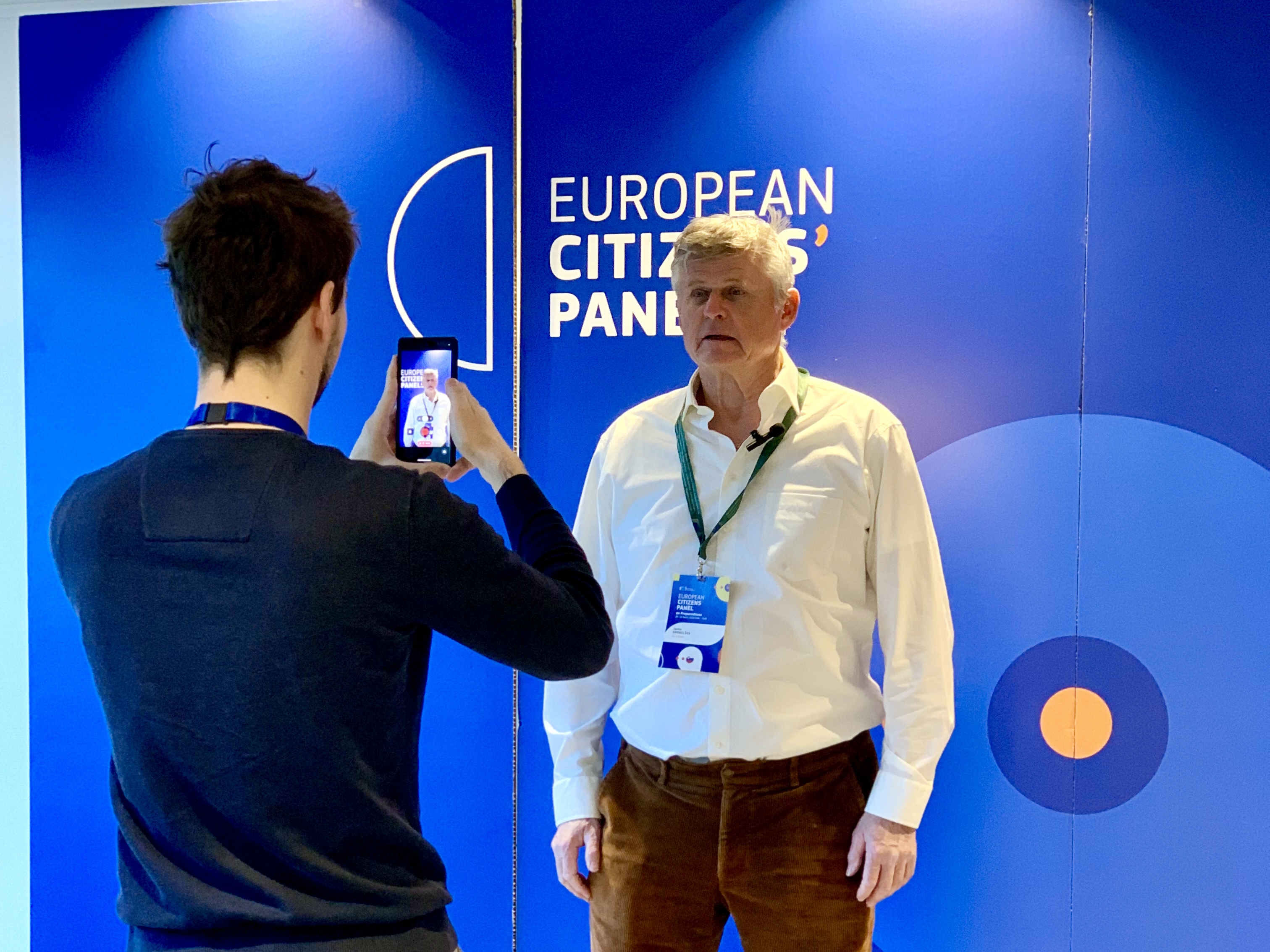
As part of this European Citizens’ Panel, we also had the opportunity to interview several participants. When asked what they would do if they heard an emergency alarm, most said they would look for an emergency exit and try to reach a safe place. Some highlighted the need for more information about the situation and the appropriate actions to take, while others emphasized the importance of staying calm. When asked about crises they had experienced, participants mainly referred to the COVID-19 pandemic, but also mentioned the war in Ukraine, even if they were not directly affected by it. This suggests that across Europe, people face similar types of crises, although their impact may vary from one country to another. For some, these events demonstrate the importance of solidarity and the ability to stand together. Overall, participants expressed a positive view of their experience in the European Citizens’ Panel, particularly appreciating the organization. Some even described the experience as eye-opening, noting how impressed they were by the participants’ ability to engage constructively throughout the day on such a complex topic. However, many believe that the European Union is only partially prepared for crises. While they see unity as a key strength, they also stressed the need to better prepare citizens to face future crises.
Conclusion
The European Citizens’ Panels are often presented as a promising answer to the EU’s democratic deficit - and to some extent, they deliver. As shown by the follow-up on energy efficiency and the launch of the Crisis Preparedness Panel, there is a growing effort to ensure that citizens’ voices do not stop at recommendations, but feed into real policy processes.
Yet the true test lies ahead. As Europe faces increasingly complex and overlapping crises, participatory democracy will only prove its value if it moves beyond consultation and leads to visible, tangible outcomes.
By the way, the team at Stand Up for Europe who wrote this article has organized an event, Europe, Get Ready! – Youth Citizens’ Dialogue on EU Preparedness in preparation of this European Citizens Panel. You can read more about the event and its main conclusions on our website.
Do you like this page?