By Morgann Darche
30/03/2026
On the 18th March 2026, Stand Up for Europe organized the event “Europe Get Ready” under the framework of CitiDem, an EU-funded project under the CERV Programme aiming at strengthening citizen participation by equipping people with the knowledge, tools, and space to engage in democratic life.
Anticipating the 8th European Citizens’ Panel on the topic of crisis preparedness taking place between the 20 and 22 March, our event aimed to open the discussion and feed directly into the current debate on the Citizens’ Engagement Platform. These panels are a key participatory instrument of the European Union, designed to give citizens a direct voice by encouraging them to share their ideas and contribute to shaping the European Commission’s future roadmap.
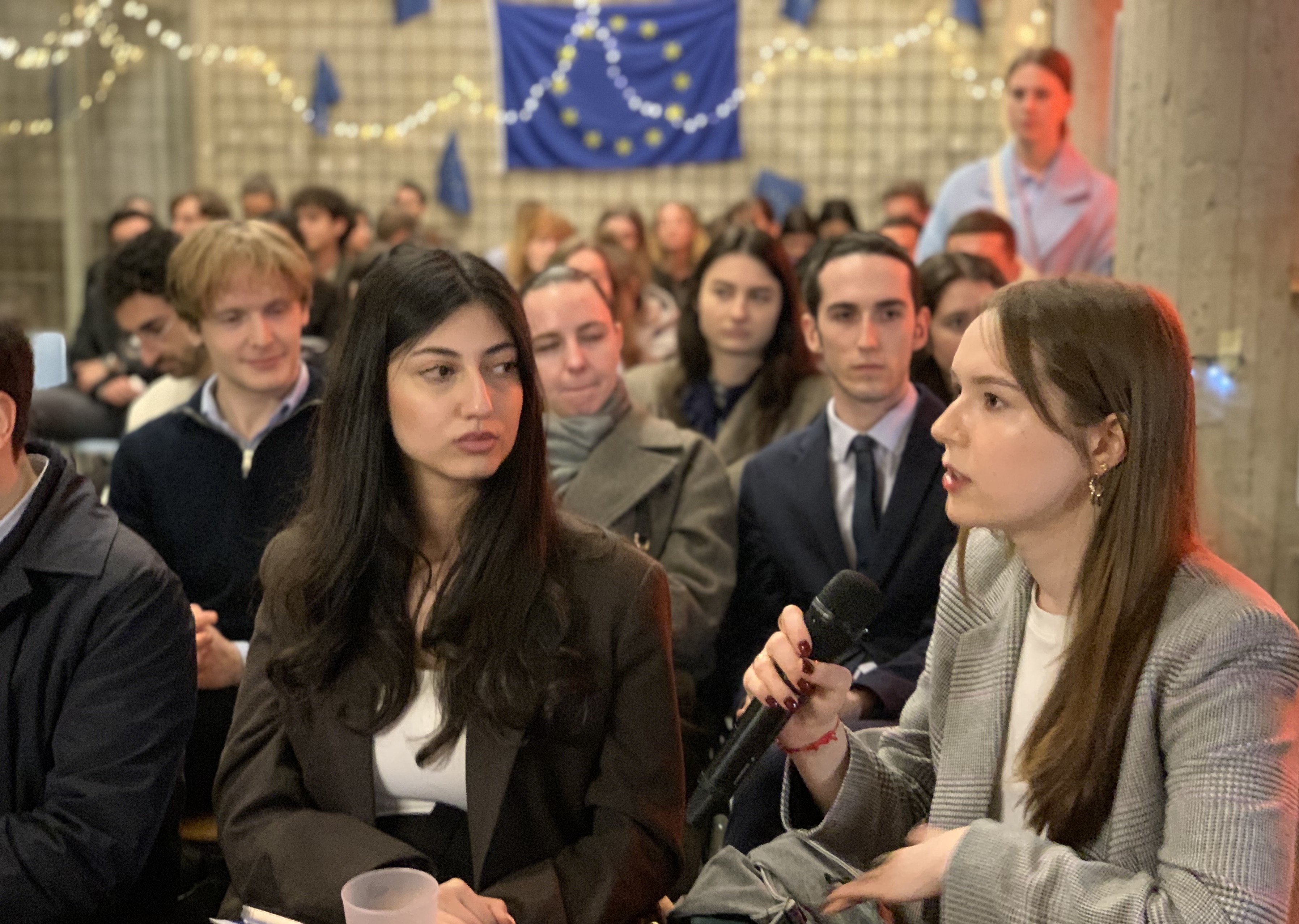
Europe Get Ready! followed the same spirit as we have invited the public to actively engage with the EU’s citizen participation mechanisms. Designed as a Youth Citizens’ Dialogue, the event targeted in particular a young public, with most participants aged between 18 and 30. This is particularly important as young people get less and less involved in politics and often perceive a growing disconnect between their everyday realities and decisions taken at the EU level. Addressing this gap was at the very core of our event by providing a platform for direct dialogue between young individuals, the Commission and Members of the European Parliament.
To fully grasp the importance of the discussions, it is essential to define the event’s topic: crisis preparedness. This concept refers to the set of measures designed to anticipate, prevent, and effectively respond to crises. As such crises are becoming more frequent and intense, preparedness has become a key element in ensuring the resilience of European societies. In this context, the European Commission launched the EU Preparedness Union Strategy, which aims to strengthen the EU’s capacity to anticipate, prevent, and respond to crises in a coordinated and efficient manner.
The first part of the event was centred on the high-level intervention of the Belgian Commissioner on Equality and Preparedness & Crisis Management Hadja Lahbib who presented what the EU is currently doing to ensure that Europe will be ready to face any emergency and how the Preparedness Union Strategy comes into play. The audience had the chance to enter directly in dialogue with the Commissioner in an extensive Q&A session following her intervention, setting the tone for the following discussions. In her speech, she defined preparedness as “being ready when the unexpected happens” and emphasised its role in “keeping family, neighbours, and communities safe.” She described preparedness as “the foundation of safety,” underlining its relevance not only at the institutional level but also in everyday life. During the Q&A session, participants raised a number of critical questions. One concerned how to enhance civil-military cooperation while maintaining citizens’ trust in public authorities. Another focused on the inclusion of persons with disabilities in policymaking, particularly in the context of crisis preparedness strategies. A third question addressed the resilience of European and national institutions in the face of external interference, notably from Russia. These exchanges demonstrated the participants’ awareness of both practical and ethical dimensions of preparedness policies.
On the other hand, Gaëtane Ricard-Nihoul, Head of Unit Public Opinion and Citizens’ Engagement at DG COMM, provided further insight into the democratic mechanisms underpinning the Citizens’ Panels as a tool of civic participation and how this connects to the current debate on Preparedness. Participants were particularly interested in the representativeness of these panels and the process of sortition used to select participants. Questions were raised about how randomness is ensured, whether participants receive compensation, and how non-EU citizens residing in the EU can be included in such processes. In response, Ricard-Nihoul highlighted the role of the Citizens’ Engagement Platform as a complementary tool that allows broader participation beyond the panels themselves. She also emphasised the long-term impact of these initiatives, notably through the creation of alumni networks and ambassador programmes that continue to promote citizen engagement beyond the panels.
The following Citizens’ Dialogue segment of the event allowed participants to take a more active role. Divided into groups, they were invited to reflect on different types of crises: natural disasters, human-induced disasters, hybrid threats, and geopolitical crises, with an additional category open to their own suggestions. Each group was tasked with identifying risks and proposing concrete solutions.
Importantly, their conclusions were not confined to the room: they were published directly on the Citizens’ Engagement Platform, transforming the workshops into a direct contribution to the European policymaking process.
Several recurring themes emerged from these discussions. Participants expressed a strong desire for a more unified and resilient Europe, emphasising cooperation over conflict between Member States. One notable proposal was the creation of a European Civil Service as an alternative to traditional military service. This initiative would include training in areas such as cybersecurity and basic healthcare, thereby enhancing societal resilience. Other proposals focused on better identifying and addressing human-induced threats, including deforestation, the creation of harmful technologies, and cyberattacks. Participants also stressed the importance of combating misinformation, regulating artificial intelligence, and strengthening the connection between citizens and European values. These ideas reflected a holistic understanding of preparedness, encompassing not only physical security but also social, environmental, and informational dimensions.
The final segment of our event then continued with a panel discussion joined by MEPs Tobias Cremer and Lukas Sieper.
Tobias Cremer, works notably in the Committee of Foreign Affairs and in the Committee on Security and Defence, as well as in the delegations for relations with the United States and with the delegation for relations with the NATO parliamentary assembly.
On his side, Lukas Sieper is part of the International Trade Committee but also of the delegations for relations with Afghanistan, for relations with Iraq but also with the Euro-Latin American parliamentary assembly and with the Euronest parliamentary assembly.
Given the current global context, their perspectives are particularly relevant to understanding how the European Union can anticipate, respond to, and prepare for crises. Their expertise have helped us connect broader geopolitical developments with the EU’s preparedness strategy and the role of democratic participation in shaping it.
A first question was asked to Tobias Cremer about how the EU could navigate the dual challenge posed by Russia and the US and reduce its dependence on external powers. In his response, Tobias Cremer argued that the current situation should not come as a surprise. He pointed to earlier warning signs, such as Russia’s annexation of Crimea in 2014 and broader shifts (notably in the US) in global politics over the past decade. According to him, the issue is not a lack of information but a lack of preparedness. He stressed the need for increased investment in European defence, both to strengthen the EU’s autonomy and to maintain strong transatlantic partnerships.
At the same time, he emphasised that preparedness cannot be imposed from above. It must be supported at the national and local levels, with the EU playing a facilitating role by providing resources, guidance, and communication. He concluded on a more optimistic note, reminding participants of the EU’s global attractiveness and the importance of remaining confident in its values. In his view, unity and reliability are among Europe’s greatest strengths.
For Lukas Sieper as well, we are not ready. He stated that the key lies in developing a forward-looking vision that goes beyond short electoral cycles. He pointed to climate change as an example of the consequences of short-term thinking: a problem that could have been mitigated earlier but now requires urgent adaptation measures. In this context, he stressed the importance of strengthening citizen participation tools, such as the European Citizens’ Initiative, which allow individuals to directly influence EU policy.
He also addressed institutional challenges, noting that while treaty changes are sometimes proposed as a solution, they may carry risks in the current political context, particularly given the rise of far-right movements. Instead, he emphasised the need to work within existing frameworks while promoting democratic engagement. He described his role as that of a “bridge” between citizens and institutions, highlighting the importance of maintaining this connection.
Finally, Lukas Sieper reflected on his political priorities, expressing his support for the integration of Ukraine into the European Union. He framed this as both a strategic and symbolic step, representing a commitment to democratic values and a clear stance in the face of geopolitical tensions.
Europe Get Ready aimed and succeeded in creating a space for dialogue, learning, and active participation. By bringing together citizens, policymakers, and experts, it demonstrated the value of inclusive approaches to crisis preparedness. More importantly, it showed that young people are not only willing to engage with complex political issues but also capable of contributing meaningful ideas and solutions. Strengthening this engagement will be essential for building a more resilient, democratic, and united Europe.
Do you like this page?