By Morgann Darche
26/06/2026
Preview
From 15 to 17 June, the G7 summit was held in Evian-les-Bains in the French Alps, bringing together representatives from Germany, Canada, the United States, France, Italy, Japan, the United-Kingdom and the European Union.
The summit brought together leaders to discuss pressing geopolitical issues – Ukraine, the Strait of Hormuz and AI – with an outcome largely determined by Trump. However, French diplomacy appeared to have won him over – but for how long? That remains to be seen.
What is the G7, and why does it matter?
But first, what is the G7? What are its origins and why is it so important?
Founded in 1975 on France's initiative, the G7 brought together the world's wealthiest nations – France, Germany, Italy, the UK, the US, Canada and Japan – to coordinate a joint response to the first oil crisis. Since then, the scope of its discussions has expanded considerably over the decades, covering issues ranging from security and terrorism to development, education, health, the environment and climate change. The EU has also been involved in the G7's work since 1977. Russia, which had been part of what was known as the G8 since 1998, was excluded in 2014 in response to the annexation of Crimea and the war in Ukraine.
The summit agenda: From Ukraine to AI
As regards the topics discussed at the summit, the tense geopolitical situation took centre stage, with major concerns over the situation in Iran and the Strait of Hormuz. The G7’s support for Ukraine was also a key issue.
On the second day, AI and digital technology moved to the fore. The question of protecting minors and banning social media for those under 15-16 years of age was on the table, alongside deeper and more contentious debates around regulation, market access and Europe's growing unease with its dependence on American technology.
As for AI, Trump had already signalled his priorities before even landing in France, threatening 100% tariffs on French wine unless Paris dropped its tax on US tech giants. CEOs from OpenAI, Anthropic and Mistral AI were all present – a sign of how central AI has become to the summit's agenda. The stakes were particularly high for Europe: the week before, the Trump administration had ordered Anthropic to suspend access for all foreign nationals to its two most powerful models – Fable 5 and Mythos 5 – citing "national security" concerns, sharpening calls for greater European digital independence.
Charm, gifts and handshakes: The diplomacy behind the deals
Shaping these outcomes, however, meant first navigating Trump – and that required a diplomatic operation all of its own.
The real geopolitical architecture of the G7 was assembled away from the main plenary halls. It was in the informal bilateral rooms of Evian that the summit's most critical and binding outcomes took shape.
Nothing was left to chance: the meeting agenda was shaped around areas of potential agreement, such as China’s economy, Ukraine, and the Strait of Hormuz, while avoiding climate change discussions. These measures were intended to encourage Trump’s constructive participation.
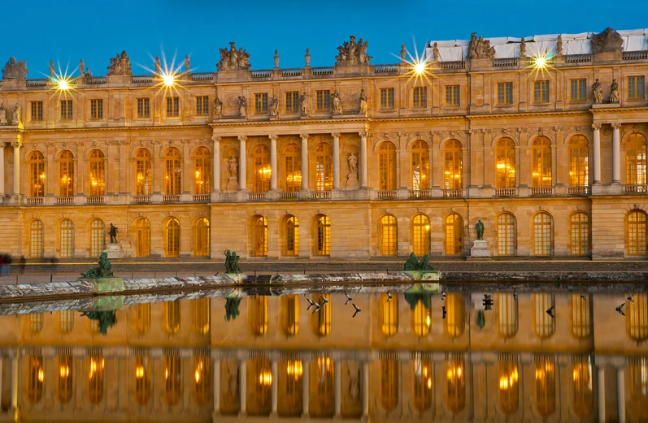
Macron had also carefully stage-managed Trump’s visit to keep him engaged. He even convinced the US president to extend his stay by inviting him to dinner at the Palace of Versailles. For his part, Merz gifted Trump a custom national football jersey. The charm offensive had a political aim: keeping Trump firmly inside the camp of Western powers ahead of a critical NATO summit taking place next month in Ankara.
The strategy appeared to pay off – though the summit also had its share of moments that said as much as any communiqué. Notably, having arrived last for a working meeting on international development, Trump paused briefly at the end of the table where other heads of state and government were already seated and declared, "I am the boss." Not all the memorable exchanges involved Trump: Meloni told Modi she hadn't smoked a cigarette for a month, and Japanese Prime Minister Sanae Takaichi spinning her chair during a break went viral online.
Trump's interpersonal moments, however, drew the most scrutiny. A prolonged handshake with Brigitte Macron that some interpreted as uncomfortable, and a notably cooler greeting from Von der Leyen compared with other leaders, did not go unnoticed. Footage showed warmer embraces for Macron and Zelensky – making the contrast with his more perfunctory exchanges all the more striking.
What came out of Evian – and what it means for Europe
The main result of these diplomatic moves was that Trump reaffirmed his support for Ukraine in the face of Russia – obtained, however, in exchange for the other G7 members' support for his deal with Iran.
The G7 stood united behind Zelensky, discussing sanctions and aid. And the G7’s support was not merely symbolic: Trump said he wanted to restore sanctions on Russian oil, which had been temporarily suspended to counter the surge in crude oil prices caused by the conflict with Iran. Another key commitment: the US and the European G7 countries will produce long-range missiles and air defence systems “under licence” in Ukraine – weapons that Zelensky has been strongly calling for. Friedrich Merz confirmed that US companies will be able to grant licences to European manufacturers, a measure that could help address the country’s desperate need for weapons.
On the Middle East, the G7 welcomed the US-Iran memorandum of understanding signed by Trump at Versailles on the final evening of the summit. Leaders called for the immediate and unconditional reopening of the Strait of Hormuz, seeing the agreement as an opening to address Iran's nuclear and ballistic threats and its regional destabilisation activities. As for Lebanon, the G7 called for a strong and immediate ceasefire and supported efforts to achieve Hezbollah's disarmament and restore the Lebanese state's monopoly on the use of force.
The digital and AI fronts proved thornier: while Macron floated the idea of a cooperation platform between democracies to define common standards, the G7 produced no binding commitments. Europe's digital sovereignty, for now, remains more aspiration than reality.
Overall, Macron hailed an “objectively successful” G7 summit following an agreement on key issues, ranging from Ukraine to Iran. European leaders have even spoken of a rapprochement with Washington. For the Europeans – who feared being sidelined in discussions on the future of peace on the continent while Trump favoured direct dialogue with Putin – their place at the table now seems firmly secured. The momentum generated by the G7 also validates their two-pronged strategy: maintaining close dialogue with Washington whilst strengthening their own diplomatic, military and financial support for Ukraine. Nevertheless, Trump's unpredictability continues to weigh on transatlantic diplomacy.
Moscow's response: Building a world without the West
Nonetheless, the G7 has not remained without reaction, particularly from Russia, which, although at the centre of the discussions, is no longer a member and no longer has a say.
In response, therefore, Putin organised a summit with ASEAN – the bloc of South-East Asian countries, which accounts for 6.3% of global GDP and has a population of nearly 700 million – at the same time as the G7. Through this move, he sought to demonstrate that Russia is not isolated despite Western sanctions and that a new economic and energy axis centred on Asia is emerging. In doing so, Moscow was sending a very clear message to the West: they are not the centre of the world, and an alternative world is being built on the other side of the globe, with Russia at its heart. This summit was all the more symbolic as it marks the 35th anniversary of relations between Russia and ASEAN. The meeting, which was originally due to take place in the Philippines – as that country currently holds the rotating ASEAN chairmanship – was being held in Kazan, in southern Russia.
The official discussions focused on their strategic partnership and cooperation in key areas, notably connectivity, education and culture. In reality, however, energy took centre stage as several ASEAN countries had been forced to turn to Russian oil due to the crisis in the Middle East. This is good news for Moscow, which had the opportunity to hammer home its message: despite all the sanctions, Russia remains a solid and reliable energy partner. Meanwhile, the Middle East was further constrained by the geographical limitations of the Strait of Hormuz.
For Moscow, this was therefore the time to capitalise on the situation, turn opportunities into reality and strengthen economic ties.
Conclusion
The G7 offered Europe a moment of cautious relief – on Ukraine, on Iran, even on the diplomatic temperature with Washington. But the summit also exposed a harder truth: when it comes to AI and digital sovereignty, Europe's strategic autonomy remains conditional on American goodwill. The real test will not come in mountain resorts, but in Brussels, when the time comes to turn declarations into binding rules – and to build, at last, the tools to back them up.
Sources
-
https://www.lesoir.be/753539/article/2026-06-17/ukraine-le-g7-uni-pourvu-que-ca-dure
-
https://www.nytimes.com/2026/06/16/world/europe/trump-g7-leaders-europe.html
-
https://edition.cnn.com/2026/06/15/politics/trump-g7-leaders-strained-relationships-vis
-
https://www.politico.eu/article/eu-donald-trump-anthropic-amodei-row-at-g7/
-
https://www.touteleurope.eu/l-ue-dans-le-monde/qu-est-ce-que-le-g8/
Do you like this page?