By Drakoulis Goudis
18/07/2025
Amidst the daily barrage of headlines—from Trump’s outbursts to fresh violence in Ukraine and the Middle East—something quieter but no less consequential is brewing in Brussels: the next long-term EU budget.
Leaks and whispers about the 2028–2034 Multiannual Financial Framework (MFF) are beginning to surface across news sites and social media feeds. Yet as usual, most coverage serves up little more than vague figures and recycled diplomat quotes. What’s missing? A clear explanation of how the EU budget is decided—and why it matters for every European citizen and business.
That’s where Stand Up For Europe steps in.
What is the MFF—and why should we care?
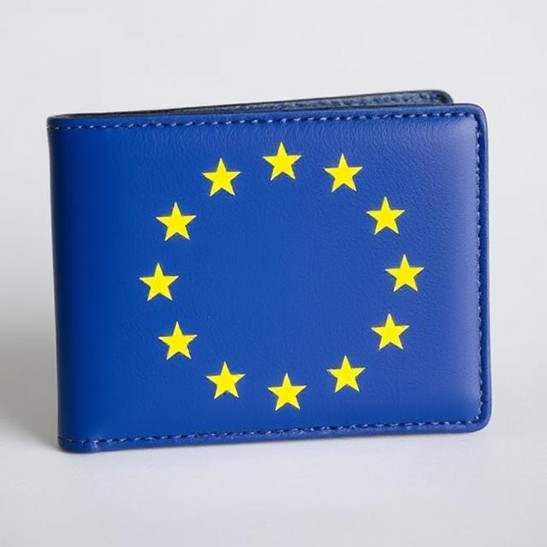
The EU’s long-term budget—officially called the Multiannual Financial Framework (MFF)—is not some technocratic spreadsheet exercise. It’s the beating heart of everything the EU does. Or, if you prefer a more cynical analogy: the wallet that funds our common ambitions.
Whether it’s rebuilding Ukraine, boosting European industry, investing in AI, subsidizing agriculture, funding border management, or leading the green transition—none of it moves without the MFF. It sets the ceiling for what the EU can spend across different policy areas for 7 years and offers the stability needed to plan, legislate, and deliver.
No MFF? No Erasmus. No Horizon. No border reinforcements. No CAP. No Ukraine aid. No Green Deal.
Step 1: The Commission’s Proposal – Europe’s Strategic Compass
The process begins with the European Commission (the EU’s executive body, as Stand Up For Europe readers know), which drafts the first version of the MFF. Think of it as the EU’s opening move in a in a high-stakes, multi-year chess match.
In theory, the proposal is shaped by consultations with member states, the European Parliament, civil society, and economic forecasts. In practice? It’s a delicate exercise in political triangulation—balancing what’s needed, what’s possible, and what 27 governments might actually accept.
This time around, according to Politico, Commission President Ursula von der Leyen wants the MFF to reflect a more geopolitical EU: long-term aid to Ukraine, more defense cooperation, tighter external borders, and strategic autonomy. But these ambitions don’t come cheap—and current revenue streams (customs duties, national contributions, carbon permits) are already under pressure. Expect the Commission to call for fresh “own resources” and more flexibility in how the budget is spent.
Step 2: The Council – Old Frugals, New Fault Lines
If the Commission sets the vision, the Council of the EU (one of the two legislative bodies alongside the European Parliament) is where the knives come out.
Each of the 27 national governments arrives with red lines, domestic headlines, and—critically—a veto in hand. And while some dynamics are familiar, new fractures are emerging in the fight over the 2028–34 MFF.
The Frugal…3+2
- Germany, Netherlands, and Sweden are doubling down on their traditional frugality. They want to cap the MFF around 1% of EU Gross National Income and are flatly rejecting any large-scale grants or common borrowing. Loans? Maybe. Grants? Absolutely not. Germany in particular is wary of what it calls “fiscal illusions,” insisting any expansion must come from national budgets—not shared EU tools. Disappointing? Always. Surprising? Not at all…
- Austria and Finland are quietly holding the same line. Finland has already said no to any pandemic-style joint borrowing. Austria’s signals are less loud, but no more flexible.
The Danish Defection
Denmark was until recently a card-carrying member of the “Frugal Four.” But in a major shift, Prime Minister Mette Frederiksen has stepped out of the old austerity club. Her message is that Europe needs to spend more on defence and strategic resilience, and Denmark won’t block it.
Cohesion and CAP: The Red Lines of South and East
Meanwhile, the defenders of cohesion and agriculture are drawing their own battle lines.
- Spain alongside Central and Eastern Europe are standing firm on cohesion funds. For them, this is not a side issue—it’s the core of EU solidarity and convergence.
- France is calling for full protection of the Common Agricultural Policy (CAP), citing farmer unrest and food security, and they are not the only ones – very few governments are willing to touch this sensitive issue.
- Italy is a bit of a wildcard. Traditionally also supporting CAP and cohesion funds, under Meloni their position in many issues is rather unclear and their priorities less obvious than the ones of the other EU big countries.
This all leaves the Council in a classic EU dilemma: big expectations, little agreement. The geopolitical mood says, “spend more.” The budgetary habits say, “not from me.” The question of how to expand the EU’s ambitions without touching the sacred cows of cohesion, agriculture, or rebates, and without inventing new money, is not foreseen to be definitively answered soon.
Step 3: The Parliament – Green Button, Red Button
The European Parliament cannot amend the MFF—but it can reject it. And with the current “von der Leyen majority” (EPP + S&D + Renew), that threat carries real weight.
The center‑right EPP (European People’s Party) is prioritizing security, competitiveness, research and innovation according to its lead MEP for budget talks, Sigfried Mureșan. But not support at the expense of the CAP and Cohesion funds – rural and regional voters are after all the core EPP voter bases. They agree with S&D that the European Social Fund must stay intact.
For the Socialists & Democrats, protecting the European Social Fund is non-negotiable. The ESF is a fund designed to support employment, social inclusion and education, core pillars of the center-left, accounting for almost €100 billion in the current financial framework. The ESF remaining an MFF cornerstone was von der Leyen’s promise to S&D during the recent no confidence motion discussion. S&D also want the next MFF to raise the overall budget to around 1.2% of EU GNI.
The liberal Renew Europe is strongly against “national cash pots” as Fabienne Keller told Euronews, citing that it would sideline EU institutions in favor of national governments and reduce accountability. Renew also want more “own resources”— revenues that the EU collects directly from citizens, complementing national contributions — and oppose any funding for “autocrats” who disrespect the Rule of Law.
The Parliament may not choose the MFF—but it can sink it. That gives these three factions enormous leverage. Expect them to both coordinate and bicker – their relationship isn’t the best lately (especially between EPP and S&D) but they do actually share a lot of common goals regarding the budget and are expected to manage to reach a consensus of Parliament demands.
Step 4: Adoption – It’s Never Over
If the Council and Parliament agree, the MFF is adopted—setting binding annual spending ceilings for the next 7 years.
But that’s just the start. Every year, detailed annual budgets still need to be negotiated under the umbrella of the MFF—and any major revision to the MFF itself requires a new unanimous agreement.
In other words: one country can still block the entire EU budget even halfway through the cycle. Yes, it’s frustrating and dysfunctional. We must live with it until the people of Europe vote for Treaty Reform.
Opinion: What Needs to Change
The EU can’t become a global actor on a 1% GDP budget. It can’t respond to crises with a budget that takes years to negotiate. And it can’t afford to let unanimity kill ambition. A real reform of the MFF process should include:
- Qualified majority voting for MFF approval and an end to the veto blackmail.
- Increased own resources, like a carbon border tax or digital levy (shortly, taxes on the greenhouse gas emission imported goods produce when manufactured, and a tax on the revenue the digital tech giants generate in the EU).
- More flexibility to react to crises without begging member states for extra funds.
Why It Matters Now
The next EU budget won’t just decide how much money we spend on policies. It will decide what kind of Europe we want:
- A fortress obsessed with borders, or a champion of human rights and international law?
- A dog chasing its own tail in tech, or a pioneer of clean industry?
- An entity dependent on US tech, Chinese critical raw materials and Middle Eastern oil and gas or a sovereign actor asserting its own geopolitical independence?
If the MFF is Europe’s wallet, then this negotiation is about what kind of future we’re willing to pay for.
The debate on these questions begins soon—and like all important EU decisions, it will be long, complex, and worth every citizen’s attention.
Do you like this page?