By Morgann Darche
07/02/2026
Iran is facing a humanitarian crisis, described as the deadliest wave of repression since the 1979 Islamic Revolution. Since late December, the country has been shaken by nationwide protests met with an exceptionally violent state crackdown, resulting in tens of thousands of deaths, mass arrests, and widespread human rights abuses. Entire cities have been subjected to siege-like conditions, including widespread communication cuts and the deliberate targeting of civilians.
Yet this human tragedy is increasingly overshadowed by diplomatic maneuvering. As indirect negotiations between the United States and Iran took place in Muscat, the capital of Oman, international attention has shifted back to geopolitical calculations and nuclear diplomacy. In doing so, the reality on the ground – the ongoing repression, the civilian casualties, and the systematic silencing of Iranian society – is pushed into the background, remaining largely underreported and dangerously neglected by the international community.
Protests in Iran and Government Repression
Protests in Iran began in late December 2025, initially driven by acute economic hardship: inflation, declining purchasing power, currency depreciation, and high unemployment. These demonstrations quickly evolved into a broader political movement openly challenging the legitimacy of the ruling regime.
The protests spread across numerous cities nationwide, including Tehran, where demonstrations mobilized hundreds of thousands of participants. January 8 marked a decisive and tragic turning point: as the scale and coordination of the protests reached unprecedented levels, Iranian authorities responded by imposing an almost total shutdown of internet access, phone communications, and information flows to and from the country. This deliberate measure aimed to disrupt protest coordination and severely limited independent reporting and external scrutiny of the ensuing crackdown.
In parallel, and as a direct response to the nationwide protests and the communication blackout, the Islamic Revolutionary Guard Corps (IRGC) – the regime’s ideological and security arm tasked with protecting the Islamic Revolution from internal and external threats – was deployed in several cities. Multiple eyewitness accounts report that security forces opened fire on protesters using live ammunition, while mass arrests targeted demonstrators, students, medical personnel, and academics.
While Iranian authorities acknowledge 3,117 deaths, human rights organizations estimate that the real number of deaths may be at least ten times higher. This wave of violence marks a collapse of even the most basic protections for civilian life.
International Reactions
The scale and the brutality of the repression has triggered international responses, though these have reflected diverging priorities and strategic calculations.
In the United States, President Donald Trump initially voiced support for Iranian protesters, warning Tehran against executions and stating that “help was on the way.” This posture was swiftly followed by a significant reinforcement of U.S. military presence in the region. The USS Abraham Lincoln aircraft carrier was deployed alongside several guided-missile destroyers and littoral combat ships, officially to deter escalation and preserve regional stability.
This show of force forms part of a broader pressure campaign aimed at compelling Iran to return to negotiations over its nuclear program. While Trump emphasized U.S. military capabilities, he also reiterated a preference for a diplomatic resolution. Over time, however, the administration’s initial focus on human rights abuses has increasingly given way to a strategy centered primarily on nuclear containment.
As for Europe, the European Union has officially designated the IRGC as a terrorist organization and is considering additional sanctions on Iran. This decision followed weeks of intense internal debate, during which several influential EU Member States warned that such a designation could reduce remaining diplomatic leverage, provoke retaliation against European nationals, and complicate ongoing nuclear negotiations with Tehran. Ultimately, the severity of the repression led a growing number of governments to conclude that the political cost of inaction outweighed the diplomatic risks. France, initially among the most cautious due to concerns over preserving its influence in nuclear diplomacy, eventually aligned with this position.
In retaliation, the Iranian Parliament declared the armed forces of several European countries to be “terrorist groups” and summoned EU ambassadors to protest what Tehran called a “provocative” and “illegal” designation, which it said violated principles of national sovereignty – a move that the EU has firmly rejected.
United States–Iran Negotiations in Muscat
Against this backdrop, indirect talks between Iran and the United States were held on Friday morning in Muscat, Oman. Iran was represented by Foreign Minister Abbas Araghchi, while the U.S. delegation was led by President Trump’s Middle East envoy, Steve Witkoff.
Oman’s mediating role reflects widespread regional concern that any direct U.S. military action against Iran could trigger a broader regional conflict. This fear has been echoed by Iran’s Supreme Leader, who warned that a U.S. strike would lead to a regional war.
While earlier U.S. statements emphasized halting repression and preventing executions, the negotiations have now clearly shifted away from humanitarian concerns and toward Iran’s nuclear program – in line with Tehran’s long-standing insistence that talks be confined strictly to this issue. The priority for the United States and its allies has become nuclear containment and regional stability, with human rights violations increasingly relegated to the margins of diplomatic engagement. This shift, while strategically calculated, comes at the cost of sidelining the ongoing humanitarian crisis unfolding inside Iran.
Conclusion: From Tehran to Berlin
As the world’s attention shifts to nuclear negotiations, the ongoing massacre and repression in Iran remain dangerously invisible. Civilian deaths, mass arrests, and the systematic silencing of society continue, yet humanitarian concerns are being pushed to the sidelines in favor of strategic calculations. This is not just a political oversight – it is a moral failure.
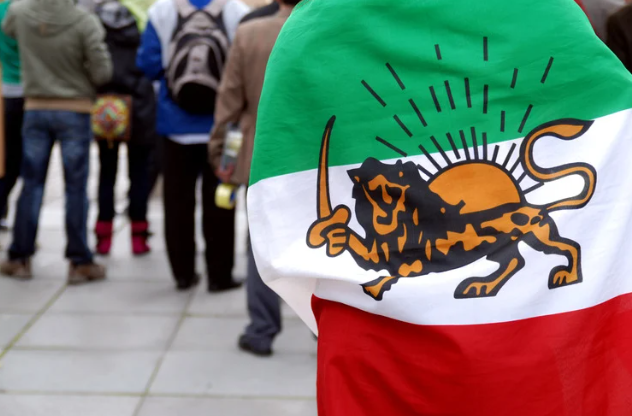
On Saturday 7 February 2026, thousands of people protested in Berlin at the Brandenburg Gate in solidarity with the victims and in an attempt to make the world look, to witness, and to refuse complicity through inaction. Activists urged not simply recognition of the human cost but a fundamental shift in Western policy: governments must stop normalising or engaging with a regime that has lost all legitimacy through its repression and systematic violence against its own people. By bringing visibility to this crisis, these mobilizations aim to pierce the regime’s information blackout and demand that the West break ties and cease legitimising a system that cannot represent the will of the Iranian people.
Sources
- https://www.politico.eu/article/iran-ayatollah-ali-khamenei-threatens-wider-war-if-washington-strikes/
- https://www.politico.eu/article/iran-president-masoud-pezeshkian-blames-donald-trump-benjamin-netanyahu-europe-fueling-violent-protests/
- https://www.politico.com/news/2026/01/30/trumps-iran-moves-rattle-arab-allies-00758363
- https://www.politico.eu/article/how-eu-france-iran-revolutionary-guard-terrorist-group/
- https://www.politico.eu/article/eu-kaja-kallas-list-iran-revolutionary-guard-terrorist-group-top-diplomat/
- https://www.euractiv.com/news/we-dont-need-a-new-war-eus-kallas-urges-us-against-bombing-iran/
- https://www.euractiv.com/news/breakthrough-or-prelude-to-attack-what-we-know-about-iran-us-talks/
- https://www.euractiv.com/news/iran-declares-european-armies-terrorist-groups-in-tit-for-tat-move/
- https://www.euractiv.com/news/iran-president-orders-talks-with-us-as-trump-hopeful-of-deal/
- https://fr.euronews.com/2026/02/05/liran-et-les-etats-unis-tiendront-des-pourparlers-sur-le-nucleaire-vendredi-a-oman
- https://fr.euronews.com/2026/02/04/le-president-iranien-veut-des-discussions-justes-et-equitables-avec-les-etats-unis
- https://fr.euronews.com/2026/02/03/iran-139-etrangers-arretes-a-yazd-au-cours-des-manifestations
- https://fr.euronews.com/2026/01/31/des-explosions-signalees-en-iran
- https://www.theguardian.com/global-development/ng-interactive/2026/feb/06/rasht-massacre-protests-iran-timeline?
Do you like this page?