By Vladimir Kovtun
03/10/2025
Preview:
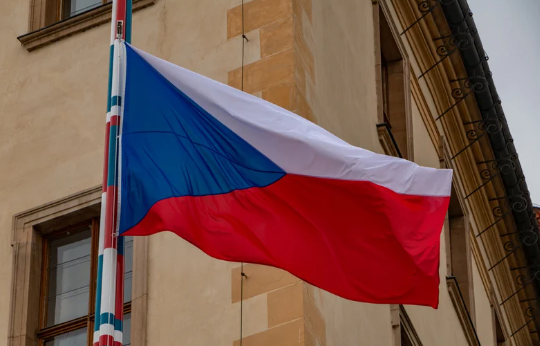
On 4 October, Czechia will hold parliamentary elections. From recent polls, Czechia’s largest populist right party, ANO (Yes), is on track to win with 31% of the vote - 11% higher than their closest competitor, Spolu (Together). It is all but guaranteed that their leader, Andrej Babiš, will be Czechia’s next Prime Minister. With ANO’s increasingly far-right agenda, Babis’s personal dealings, and the party’s membership in the far-right Patriots of Europe political group in the European Parliament, it can be asked: Will Czechia follow in Hungary’s illiberal footsteps?
About ANO:
ANO was not always a traditional far-right party. Emerging as a coalition partner to the Social Democratic Party, they originated as a catch-all populist party with left and right stances. They even gained political support from the KSCM (Communist Party of Bohemia and Moravia), the successor to the Soviet-era Communist Party of Czechoslovakia, which ruled the country before the Velvet Revolution. Between 2017 and 2021, ANO was in charge of a minority government, which, while following populist policy, could be best described as opportunist in its means of governing. But, with the rise of far-right sentiment throughout Europe, they decided to frame themselves as a more standard far-right party. As of this current election, the party’s platform focuses on blocking immigration, increasing pensions, opposing the European Green Deal, and opposing aid to Ukraine. Most worryingly, ANO has a good relationship with Hungary’s ruling Fidesz party, and as such, a new ANO government in Czechia would aid Hungary’s efforts to disrupt continued EU integration.
Concurrently with the election, ANO faces a serious scandal surrounding its leader, Andrej Babiš. Babiš was the owner of the major conglomerate Agrofert until 2017, which provided him with a massive net worth of $4.3 billion (3.65 billion Euros). During Babiš’s term as Prime Minister, there was a scandal in which it was revealed that subsidies for small businesses were given to a major recreational center he owned - Stork’s Nest. This was despite the fact that Stork’s Nest was a subsidiary of Agrofert, and thus should not have been eligible for small business subsidies. In all, Babiš allegedly defrauded the EU of 2 million Euros in subsidies. It has also been established in a European Commission audit that, as the former Prime Minister was both in charge of Agrofert and Czechia’s EU Budget at the time of the offenses, he clearly violated Article 4 of the Conflict of Interests Act. Prague’s district court will soon rule on the case, perhaps putting ANO’s win into jeopardy. Though the district court has previously acquitted Babiš, said acquittal was overturned by Prague’s high court, and under Czech law, the district court will be unable to acquit him again unless they discover additional evidence.
Potential coalition partners for ANO:
ANO has a few notable coalition partners. The largest of them is the far-right SPD (Freedom and Direct Democracy), polling at 13%. The SPD and its Japan-born leader, Tomio Okamura, advocate for notably more radical positions than ANO - even calling for a Czech exit from the EU. Though the SPD is a normally political pariah in Czechia, it seems that with ANO’s rightward turn, it is the largest party willing to form a coalition with it.
There is also the Stacilo (Enough) coalition - an alliance of the KSCM and other left-wing parties. They broadly seek the removal of Ukraine aid, a more Russia-friendly foreign policy, and greater social spending. Though Babiš has claimed he will not work with Stacilo, given his history with their predecessors, it seems he will turn to them as a coalition partner if he cannot otherwise build a majority coalition. Polling at 7% at the end of September 2025, ANO likely needs their support to build a government.
In addition to the SPD, Czechia has another far-right party rising to prominence - Auto (Motoristé sobě). Auto is a party that, beyond following the general policy points of far-right parties, focuses on eliminating public transportation in favor of cars. Auto’s leader, Filip Turek, has had numerous controversies due to his conduct, which includes publicly performing a nazi salute in his car. The party has been rising in the polls over the last few months, but with a projected support of 6%, there is a good chance they might fall below Czechia’s 5% threshold for a party to gain seats in parliament. As such, though they might provide ANO with the chance to build a right-wing coalition government, ANO cannot rely on their participation.
Causes for optimism:
Luckily, it does not seem as if Czechia will experience the same democratic backsliding as Slovakia or Hungary. Given the aforementioned circumstances, the future government of Czechia will likely be a minority government similar to ANO’s last government. They will have far less ability to make sweeping changes compared to Fidesz in Hungary. As such, though ANO may challenge democratic norms, Czechia’s status as a democracy will likely not be existentially threatened.
There is also another factor to consider - Czechia’s President Petr Pavel. President Pavel is the former chairman of the NATO Military Committee and a political centrist. He defeated Andrej Babiš to become Czechia’s current president in 2021. According to the country’s laws, President Pavel can block Babiš from becoming Prime Minister by simply refusing to appoint him as a candidate for Prime Minister. This is a real possibility - the Czech President is reportedly in talks with his lawyers over whether to block Babiš. Given Babiš’s trial for defrauding the EU, President Pavel is seriously considering blocking Babiš’s appointment if he is unable to eliminate his conflict of interest. As such, ANO will have to traverse a serious hurdle to create a government, even if this election makes them the largest party in parliament.
Existing Risks
However, though ANO does not have the political ability to break Czech democracy, it still poses risks to EU interests. ANO is generally skeptical of support to Ukraine, and in particular wants to stop a major drive by the Czech government to source over 1 million shells for Kyiv’s war effort. They claim that the initiative is simply too costly, and Czechia should focus its spending on its own affairs. This effort is important because in the Ukraine War, Ukraine’s greatest weakness has been its shell disparity with Russia. After ramping up production throughout the Ukraine War, in 2024, Russia produced 4.5 million shells a year, 4 times the 1.2 million shells produced by all of NATO combined in that timeframe. Ukraine, on the other hand, has generally underdeveloped artillery production capabilities, only gaining the ability to produce its own 155 millimeter shells in 2024. This artillery advantage has been one of the key factors for Russia’s steady advances since 2023. As such, the loss of Czechia’s initiative for sourcing artillery would provide a serious blow to Ukraine’s ability to defend itself, and by extension to the EU’s interests in Ukraine.
If ANO wins, Czechia will likely remain a democracy, but it will become yet another disruptive force within the Union. Further integration will become even less likely, and it will become more difficult for the EU to coordinate on issues like climate change. Especially given the party’s likely coalition partners, a new ANO government may lay the groundwork for a more extreme government in the mid-term future. Elections have consequences, and hopefully, the Czech public will elect a government that acts in their best interests on 4th October.
Sources
- https://www.politico.eu/article/czechia-andrej-babis-rust-belt-echoes-america-populist-shift-election-parliament/
- https://www.politico.eu/article/andrej-babis-czech-parliament-confirms-minority-government/
- https://www.dw.com/en/election-campaign-in-czechia-enters-its-final-phase/a-74119500
- https://transparency.eu/andrej-babiss-potential-conflict-of-interests/?output=pdf
- https://www.forbes.com/profile/andrej-babis/
Do you like this page?